Building a home is one of the most significant investments a person makes in their lifetime. Naturally, homeowners want to feel confident about every decision they make during the design process. While floor plans, sections, and elevations are essential tools for architects, they can often be difficult for homeowners to interpret fully. A room may look perfect on paper, but how will it actually feel when you walk through it? Will the staircase create the visual impact you imagined? Will the double-height living room feel spacious or overwhelming?
This is where 3D visualisation in architecture becomes an invaluable part of the design process.
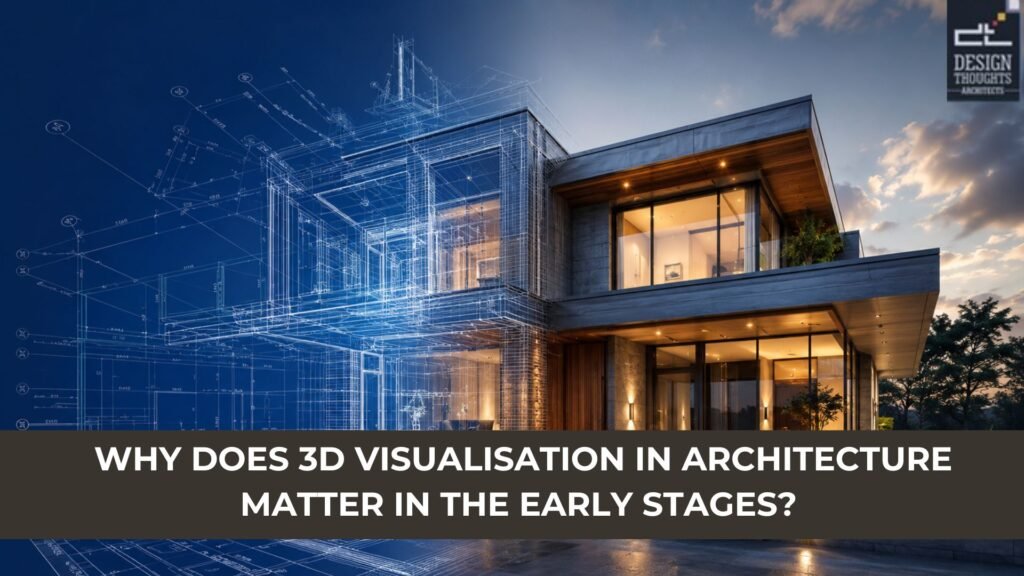
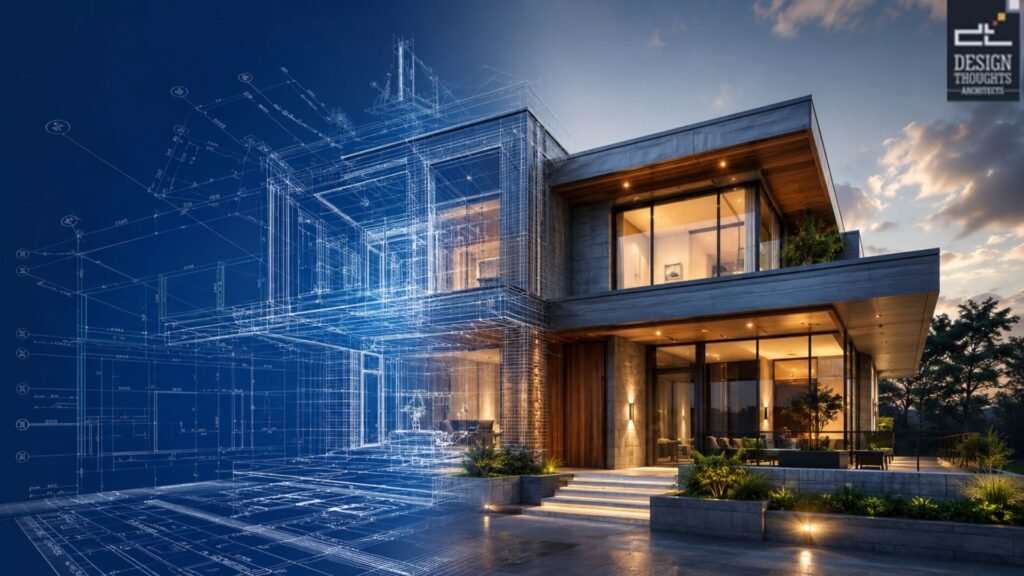
At its core, 3D visualisation bridges the gap between technical drawings and real-life experience. It allows homeowners to see, understand, and evaluate their future home before construction begins. More importantly, it helps architects and clients make informed decisions early, when changes are easy to implement and significantly less expensive.
How Does 3D Visualisation in Architecture Help You See Your Home Before It Is Built?
A floor plan tells you where walls, doors, and rooms are located. It communicates dimensions and spatial arrangements. However, for most people, interpreting a two-dimensional drawing and imagining a three-dimensional space requires some experience.
We use the same early visualisation process across all our architecture specialisations, from villas and row houses to apartments and hospitality projects.
A 3D visualisation in architecture does something entirely different; it communicates experience.
It helps homeowners understand:
● The overall form and proportions of the house
● The relationship between different spaces
● Interior volumes and ceiling heights
● Material combinations and finishes
● The scale of windows and openings
● The visual impact of architectural features
For many clients, this is the first moment when the design truly comes alive. What was once a collection of drawings suddenly becomes a home they can envision living in.
Simple elements such as partition designs, feature walls, niches, and built-in furniture often become much easier to evaluate through a 3D model. Details that may appear insignificant in a floor plan can have a major influence on the final experience of a space.
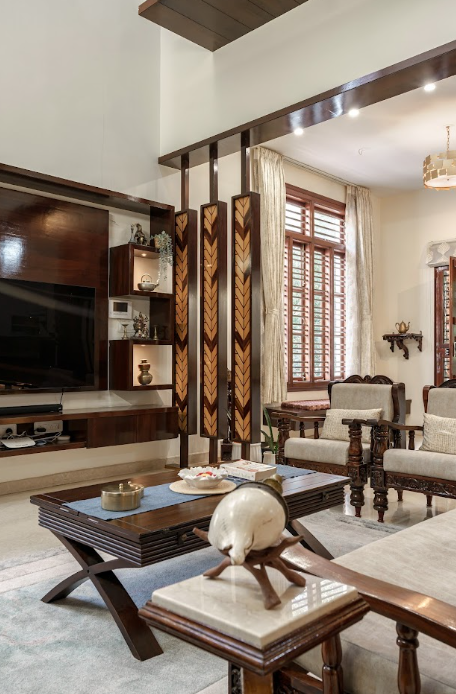
Partition designs that came from the 3D visualisation of the home.
Better Decisions, Fewer Revisions
One of the biggest advantages of early-stage visualisation is clarity.
- Many design revisions happen not because the design is flawed, but because homeowners struggle to visualise the outcome from technical drawings alone. Once construction begins, they may realise that certain elements don’t look the way they expected.
3D visualisation in architecture helps eliminate this uncertainty.
Clients can evaluate:
● How a staircase integrates into the overall space
● The visual impact of double-height volumes
● Material and colour combinations
● Window placements and proportions
● Furniture layouts and circulation patterns
● Interior and exterior aesthetics
For example, a double-height living room may seem exciting on a floor plan, but a 3D visualisation helps homeowners understand its actual scale and atmosphere. They can see how it connects different levels of the house, how natural light enters the space, and how it contributes to the overall experience.
This level of understanding leads to more confident approvals and fewer design changes later in the process.
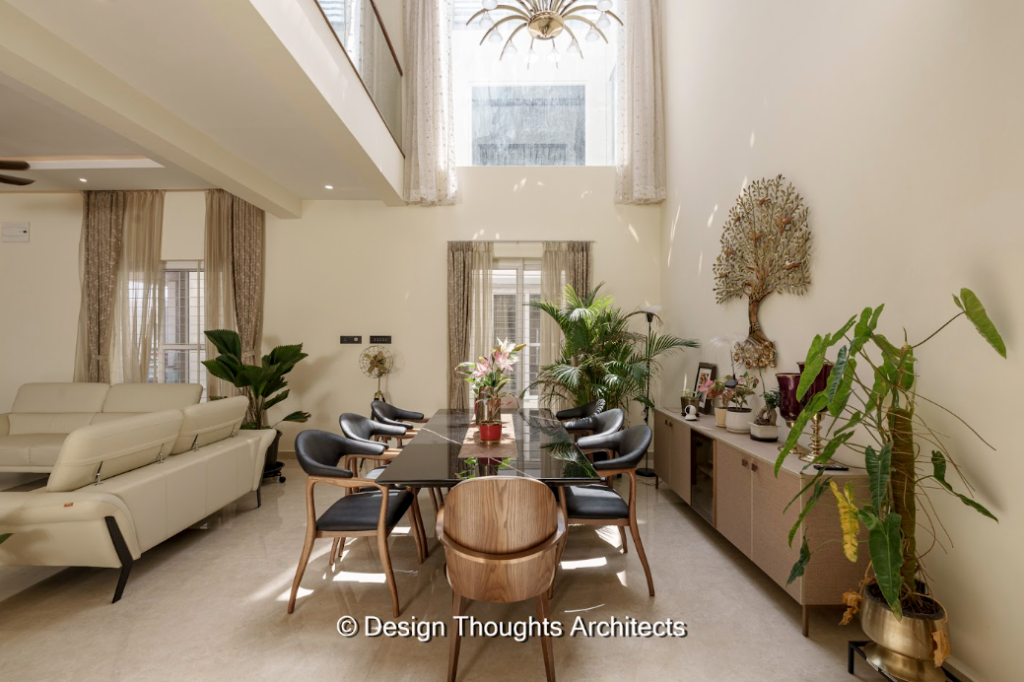
Homeowners understand the effect of double-heights better through 3D visualisations
How Does 3D Visualisation in Architecture Reduce Costly Changes During Construction?
Every architect has experienced it: a client sees a space under construction and suddenly wants to move a window, modify a staircase, change a partition, or alter a façade element.
While changes on paper are relatively simple, changes on site can be expensive.
Late-stage modifications often result in:
● Demolition and reconstruction
● Additional labour costs
● Material wastage
● Project delays
● Coordination challenges with contractors and consultants
The earlier a design issue is identified before construction begins, the easier it is to resolve.
Architectural visualisation also helps homeowners understand scale, design intent, and possible design gaps before construction begins.
3D visualisation in architecture acts as a powerful risk-management tool. It allows homeowners to review the design comprehensively before construction starts, reducing the likelihood of costly surprises later.
In many cases, clients identify improvements during the visualisation stage that enhance both functionality and aesthetics. Because these changes occur before construction begins, they can be incorporated efficiently without impacting budgets or timelines.
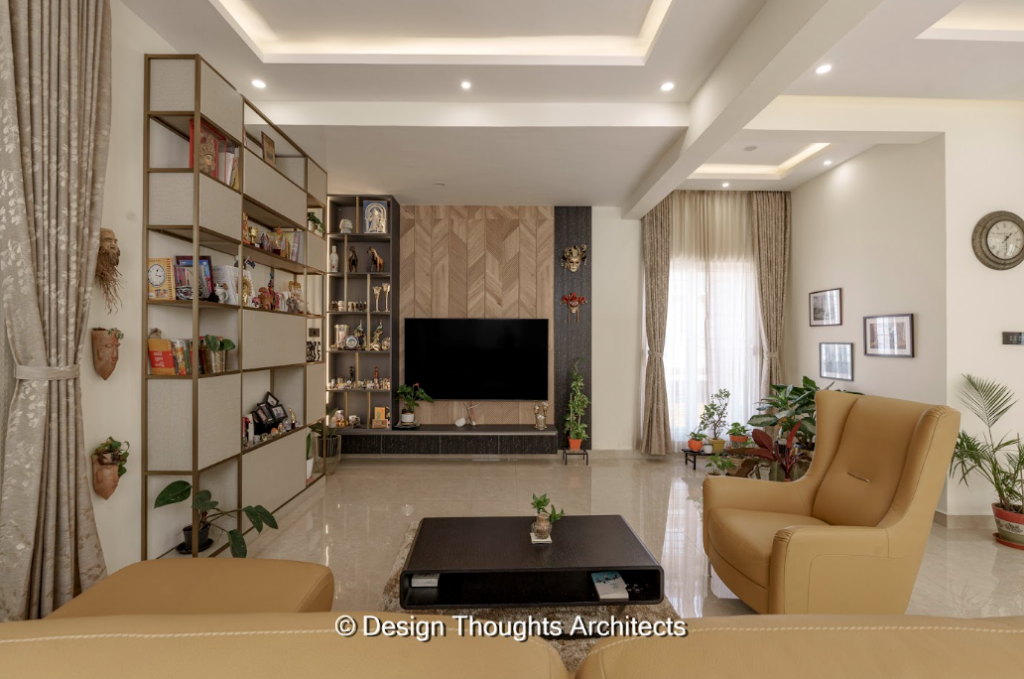
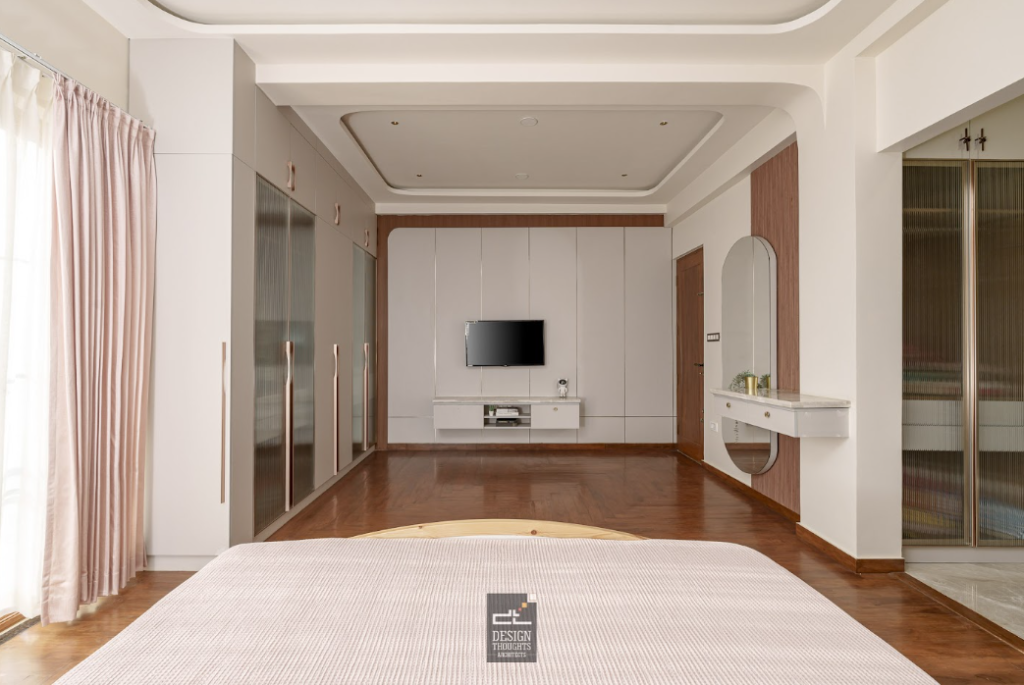
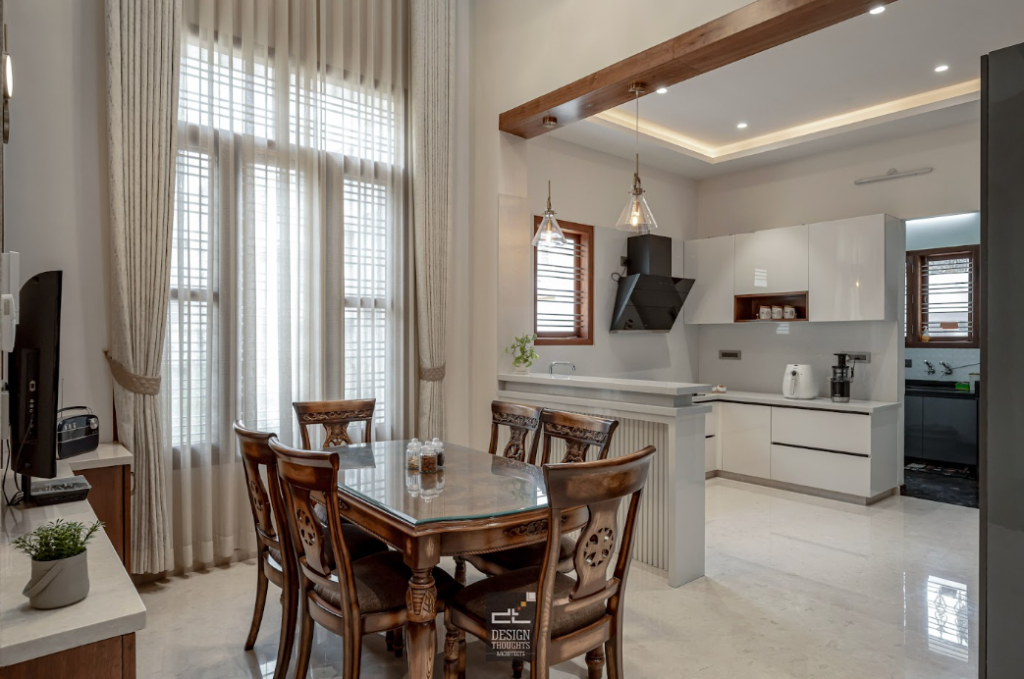
Designs that got converted from 3D visualisations to reality in this home.
Understanding Light, Scale, and Proportion
Some of the most important qualities of architecture are also the most difficult to communicate through technical drawings.
Light, scale, and proportion play a significant role in determining how a home feels, yet they are not always easy for homeowners to visualise from plans and elevations alone.
A well-developed 3D visualisation helps clients understand:
Natural Light
How sunlight enters a room can dramatically affect comfort and ambience. Visualisations help homeowners see where light enters, how it changes throughout the day, and how it interacts with architectural elements.
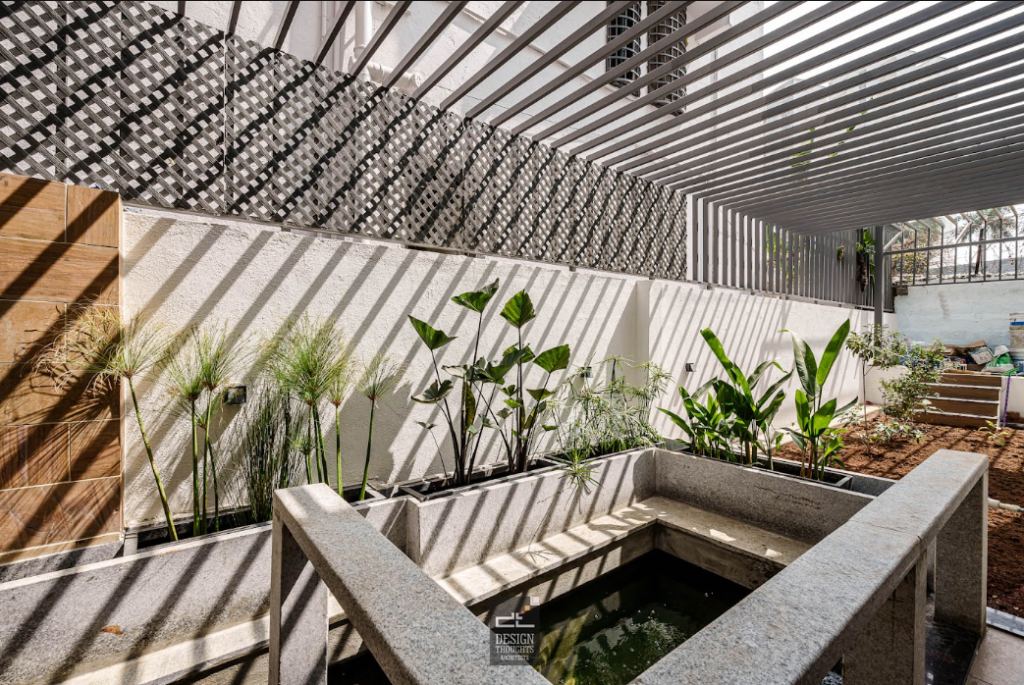
The clients found it easy to choose the grill design for this lovely outdoor garden space with the help of 3D visualisation in architecture.
Scale
A room that appears large on paper may feel surprisingly compact once furniture is introduced. Conversely, a carefully proportioned space may feel much more spacious than its dimensions suggest.
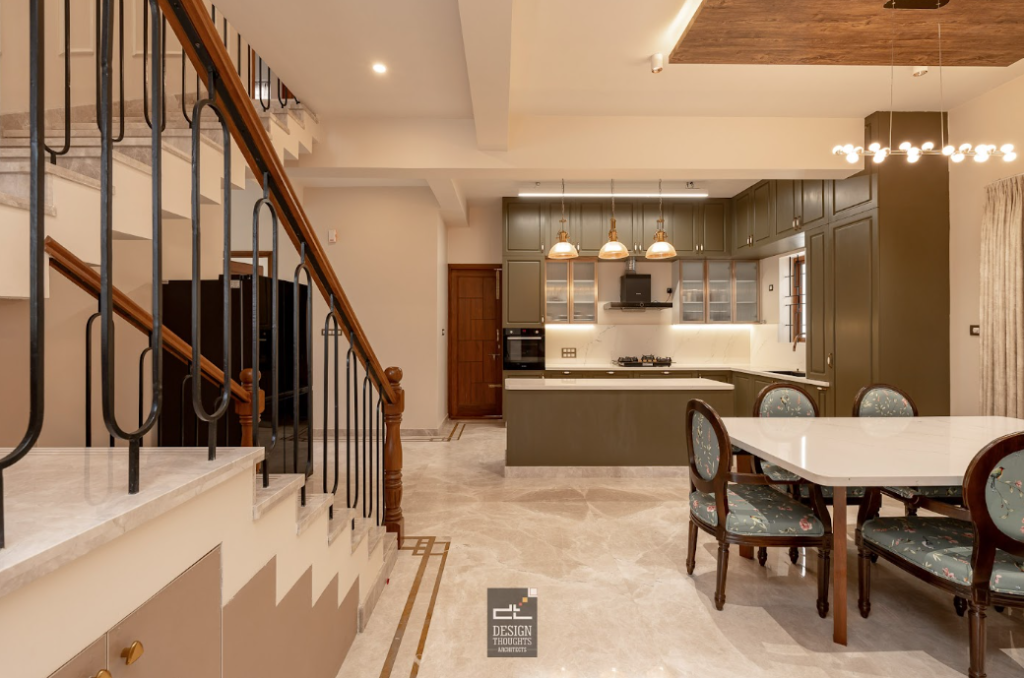
The views of the kitchen from the staircase and dining give a better understanding of scale.
User Experience
By incorporating furniture, lighting, and human-scale references, visualisations allow homeowners to imagine themselves living in the space. They can evaluate circulation, functionality, and comfort before construction begins.
This ability to experience a home virtually before it is built helps clients make more informed decisions and creates greater confidence in the design process.
A 3D walkthrough gives you a good user experience even before your home is built.
Simplifying Material and Design Choices
Selecting finishes and architectural details can sometimes feel overwhelming. Homeowners are often asked to choose between multiple materials, textures, colours, and design options.
Material selection is where 3D helps most on the inside, which is why it runs through our interiors specialisation for homes, offices, retail and hospitality.
While samples are useful, they don’t always communicate how different elements will work together as part of a complete design.
Through 3D visualisation in architecture, clients can compare:
● Facade treatments
● Flooring materials
● Wall finishes
● Staircase designs
● Partition concepts
● Outdoor elements
● Lighting approaches
For example, one of our clients found it significantly easier to finalise the grill design for their outdoor garden space after reviewing multiple visualisation options. What seemed difficult to decide using drawings alone became straightforward once they could see the design within the context of the overall home.
Visualisation transforms abstract decisions into tangible choices.
Final renderings of a home based on clear references given by the clients
Why Is 3D Visualisation in Architecture More Than a Presentation Tool?
Many people think of 3D visualisation as simply a presentation tool. In reality, it is much more than that.
It is a design-development tool.
It helps architects refine ideas, helps homeowners understand spaces, and helps projects move forward with greater clarity and confidence. By visualising a home before construction begins, potential challenges can be identified early, design opportunities can be explored thoroughly, and decisions can be made with certainty.
Wrap Up
A home should never be built on assumptions.
The more clearly homeowners understand their future space, the more successful the outcome will be. 3D visualisation in architecture makes this possible by turning drawings into experiences and ideas into something tangible.
At Design Thoughts Architects, 3D visualisation is not an optional add-on; it is an integral part of our design process. We believe homeowners should have the opportunity to see, understand, and experience their future home long before the first brick is laid.
Because great design is not just about creating beautiful spaces. It is about ensuring that every decision is understood, evaluated, and made with confidence.
FAQs
3D visualisation in architecture is the process of creating realistic digital representations of a building before it is constructed. It helps homeowners understand the design, materials, proportions, and spatial experience of their future home.
3D visualisation allows homeowners to see and evaluate the design before construction begins. It helps identify potential issues early, reduces misunderstandings, and minimises costly design changes during construction.
A floor plan shows room layouts and dimensions in two dimensions, while a 3D visualisation shows how the home will actually look and feel. It provides a realistic understanding of volumes, heights, materials, lighting, and overall aesthetics.
Yes. By helping clients make informed decisions early in the design process, 3D visualisation reduces the likelihood of expensive modifications, demolition, and rework once construction has started.
Absolutely. 3D visualisations can showcase furniture layouts, material combinations, colour schemes, lighting concepts, and partition designs, making it easier to finalise interior design choices.
Yes. Modern architectural visualisations can demonstrate how sunlight interacts with spaces, helping homeowners understand daylight patterns, room brightness, and the impact of window placement.
3D visualisation in architecture is especially valuable for custom homes because every design is unique. It helps homeowners review and refine architectural details before construction begins.
Yes. Features such as double-height living rooms, staircases, courtyards, and open-plan layouts are often difficult to interpret from drawings alone. A 3D model provides a realistic view of their scale and visual impact.
The ideal time is during the design development stage, before construction drawings are finalised. This allows homeowners to review the design thoroughly and make changes when they are still easy and cost-effective.
Yes. Considering the overall cost of building a home, investing in 3D visualisation provides clarity, improves decision-making, reduces construction risks, and helps ensure the outcome matches the homeowner’s expectations.