
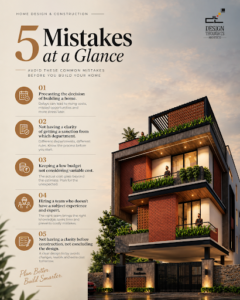
5 Common Mistakes Property Owners Do Again & Again in Building a Home
Building a home is one of the biggest investments of a lifetime. It is also one of the most emotional. Yet, year after year, we see property owners in Bangalore and across India repeat the same mistakes, mistakes that lead to delays, budget overruns and compromises on the dream home they imagined. The good news? Every one of these mistakes is avoidable. At Design Thoughts Architects, we have guided families through residential design, planning and construction for over 13 years. Here are the five mistakes we see again and again and how you can steer clear of them. Family discussing home construction plans with residential architects in Bangalore 1. Procrastinating the Decision to Build Your Home “Let’s start next year.” “Let’s wait until prices settle.” “Let’s finish other commitments first.” Sound familiar? Postponing the decision to build is the most common mistake property owners make, and it feels harmless at the time. But delay rarely stays a delay. It quietly turns into pressure. The impact: The longer the decision is put off, the more pressure builds to start quickly. When the day finally comes, owners rush to begin without preparation: no finalised design, no sanction in place, no clear budget